Evo Slim Official Website › Blog › Blood Sugar Trials Are Not Weight Trials
Most Of These Botanicals Were Studied For Blood Sugar, Not Weight
Five of the six most-researched rows on this panel were tested against a glucose endpoint in people with type 2 diabetes. Only one was studied for body weight as a primary outcome. That distinction is invisible on a label and it changes what every citation in this category is worth.
The swap nobody announces
Open almost any weight-support label and you will find banaba, gymnema, bitter melon, cinnamon or white mulberry. Open the research behind those names and you will find something slightly different from what you expected: trials in people with type 2 diabetes, measuring fasting glucose or HbA1c, over eight to twelve weeks.
Those are real studies. They were properly conducted, they are indexed, and anyone can read them. What they are not is evidence about body weight in healthy adults, which is what the shelf they end up on is selling.
Nobody announces the swap because nobody has to. A label names an ingredient, a reader searches the ingredient, a study comes back, and the assumption does the rest.
What each row was actually tested against
| Row | What its trials measured | What they found | Was body weight an outcome? |
|---|---|---|---|
| Bitter melon | Fasting glucose and HbA1c | A small reduction in fasting glycaemia; Cochrane found insufficient evidence | Rarely, and secondary |
| Cinnamon | Glycaemic markers in type 2 diabetes | Small changes in fasting glucose and lipids | Sometimes, as a secondary outcome |
| Banaba | Post-load glucose, mostly small studies | Modest and inconsistent | No |
| Gymnema | Glycaemic control | Modest effects at 200–400 mg a day | In a later review, secondarily |
| White mulberry | Post-meal glucose rise | Lower rise at gram amounts | No |
| Chromium | Body weight and composition, directly | A small average difference; rated low quality by Cochrane | Yes, primary |
Five of the six rows were studied for a different endpoint from the one the category is sold on. Only chromium was studied for body weight as a primary outcome.
The right-hand column is the one to read. Five of the six were studied against a glucose endpoint. One was studied against body weight, and the pooled result there was small and rated low quality by the reviewers who assessed it.
That is not an argument that the botanicals are useless. Glucose handling after a meal is a reasonable thing to be interested in, and it is plausibly connected to appetite and to what happens in the afternoon. It is simply not the same claim, and the difference should not be lost in the gap between a label and a search engine.
Read the Evo Slim panel before you decide
Twenty actives, an amount printed against every one, one capsule a day and 30 to a bottle. The 60-day window runs from the day you pay, so the deadline worth working to is day fifty.
Two bottles $158 · six bottles $294 · 60 days from purchase
Order Evo Slim On The Official WebsiteOne capsule a day · 30 per bottle · lot EVO-26/GO-1521
Why the two endpoints came apart
There is a historical reason for the split and it is worth knowing, because it explains why the literature looks the way it does.
Most of these plants entered modern research through traditional use for what would now be called blood-sugar handling. Funding and ethical approval follow existing questions, so the trials that got run measured glucose. Very few researchers have ever set out to test a botanical extract against body weight as a primary outcome in healthy adults, because that is an expensive trial with a weak prior and no obvious funder.
Meanwhile the commercial shelf that wanted these ingredients was the weight shelf. The names travelled; the endpoints did not.
- Almost every citation in this category answers a question adjacent to the one a buyer is asking.
- The populations are usually people with a diagnosis, not healthy adults, which is a second gap on top of the first.
- The absence of weight trials is not evidence that the ingredients do nothing. It is evidence that nobody has looked properly, which is a different and less satisfying conclusion.
Five ways a study gets borrowed
| The move | How it reads on a page | Why it does not follow |
|---|---|---|
| Outcome swap | “Clinically studied ingredients” | Studied for what? A glucose endpoint is not a weight endpoint |
| Population swap | “Shown to help in clinical trials” | Most of these trials enrolled people with type 2 diabetes, not healthy adults |
| Dose swap | “Contains gymnema, shown to…” | The showing belongs to 200–400 mg, not to 3 mg |
| Form swap | “Contains cinnamon” | Powder and extract are different materials with different trials |
| Aggregation | “Twenty clinically studied ingredients” | Twenty separate literatures do not add up to one finding about a capsule |
Five ways a real study gets attached to a product it never tested. This label does none of them: the bottle prints one structure-and-function claim and names no study.
Each of those is a small step and none of them is a lie exactly. Stacked together they turn a modest glucose finding in a clinical population at a gram dose into an implied weight claim for a healthy adult at three milligrams.
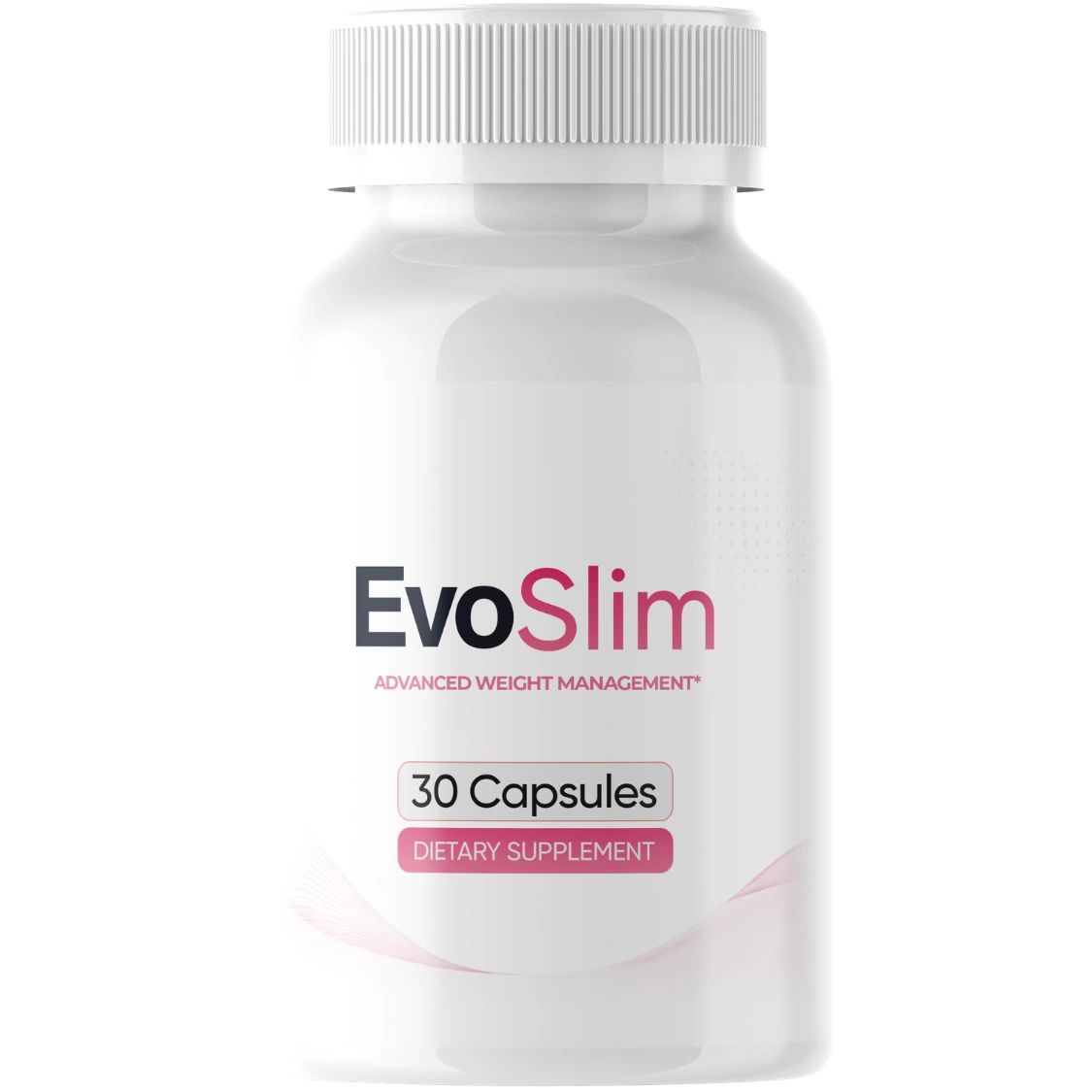
This label does not make any of the five moves, and that is worth saying since this desk sells it. The bottle prints one structure-and-function claim, names no trial, shows no logo and quotes no researcher. The seller's own diagram, pictured above, talks about routine rather than mechanism.
The one row that was studied for weight
Chromium is the exception, and it is instructive precisely because it is the strongest case available.
A 2013 meta-analysis of randomised trials pooled chromium supplementation in overweight and obese adults and found a small average difference in body weight. The Cochrane review published the same year looked at chromium picolinate specifically, rated the evidence low quality, and treated the effect as uncertain.
Trial amounts mostly ran 200 to 1,000 micrograms a day over eight to twenty-four weeks. This label carries 67 micrograms, which is below that range while still being nearly double the nutritional reference intake. Both things are true at once, and a panel that prints 191% is telling you about the second one rather than the first.
How to check a citation in ninety seconds
- Read the title for the endpoint. “Glycemic control” and “body weight” are different papers, and the title almost always says which.
- Find the population. Type 2 diabetes, prediabetes or healthy adults. This is usually in the title or the first line of the abstract.
- Find the dose and the unit. Milligrams of extract, grams of powder, or milligrams of a named compound. The unit is half the answer.
- Check the certainty language. “Low certainty” and “insufficient evidence” are conclusions, not hedges, and reviewers use them deliberately.
Ninety seconds per citation, and it works on any product page anywhere. Applied to this bottle, the exercise is done row by row on the ingredients page, where each label amount is printed beside the amount its trial used.
Why this matters more than the amounts
Dose fidelity is the criticism this category usually gets, and it is the easier one. A reader can see that three milligrams is small without any background at all.
The endpoint problem is harder because it survives a correct dose. A product could carry gymnema at a full 400 milligrams and the honest summary would still be that its trials measured glucose in people with diabetes. Fixing the amount would not fix the claim.
That is why this post exists alongside the one about token rows rather than inside it. They are two separate problems and a label can fail either one independently.
What a fair citation would look like
It is easier to criticise this than to demonstrate the alternative, so here is the alternative, written as a label sentence a manufacturer could legally print.
“Contains gymnema sylvestre leaf extract. Gymnema has been studied at 200 to 400 mg a day for effects on glycaemic markers in adults with type 2 diabetes; this product provides 3 mg and has not itself been studied.” Three clauses: the ingredient, the amount and population that were studied, and the honest distance between that and this capsule.
No label in this category prints a sentence like that, and none has to. But it is the thing a reader is trying to reconstruct every time they search an ingredient name, and a product that printed it would be the easiest purchase on the shelf to make with your eyes open.
The largest of all of them sits underneath both. The reviewers who assess what actually moves body weight in adults keep landing on sustained behavioural programmes measured over a year. No capsule on any shelf competes with that finding, and the honest place for a supplement is beside it rather than instead of it.
Body weight has many inputs and some of the reasons it does not move deserve a proper assessment rather than a supplement. Nothing in this article is medical advice, nothing here is a treatment for anything, and anyone taking prescription medication should raise it once before starting any capsule.
References
- Peter EL, Kasali FM, Deyno S, et al. Momordica charantia L. lowers elevated glycaemia in type 2 diabetes mellitus patients: Systematic review and meta-analysis. J Ethnopharmacol. 2019;231:311-324. PMID 30385422. https://pubmed.ncbi.nlm.nih.gov/30385422/
- Ooi CP, Yassin Z, Hamid TA. Momordica charantia for type 2 diabetes mellitus. Cochrane Database Syst Rev. 2012;2012(8):CD007845. PMID 22895968. https://pubmed.ncbi.nlm.nih.gov/22895968/
- Allen RW, Schwartzman E, Baker WL, et al. Cinnamon use in type 2 diabetes: an updated systematic review and meta-analysis. Ann Fam Med. 2013;11(5):452-9. PMID 24019277. https://pubmed.ncbi.nlm.nih.gov/24019277/
- Onakpoya I, Posadzki P, Ernst E. Chromium supplementation in overweight and obesity: a systematic review and meta-analysis of randomized clinical trials. Obes Rev. 2013;14(6):496-507. PMID 23495911. https://pubmed.ncbi.nlm.nih.gov/23495911/
- Tian H, Guo X, Wang X, et al. Chromium picolinate supplementation for overweight or obese adults. Cochrane Database Syst Rev. 2013;2013(11):CD010063. PMID 24293292. https://pubmed.ncbi.nlm.nih.gov/24293292/
- US Preventive Services Task Force; Curry SJ, Krist AH, Owens DK, et al. Behavioral Weight Loss Interventions to Prevent Obesity-Related Morbidity and Mortality in Adults: US Preventive Services Task Force Recommendation Statement. JAMA. 2018;320(11):1163-1171. PMID 30326502. https://pubmed.ncbi.nlm.nih.gov/30326502/