Evo Slim Official Website › Blog › What 1% Corosolic Acid Means
What “1% Corosolic Acid” Actually Means On A Panel
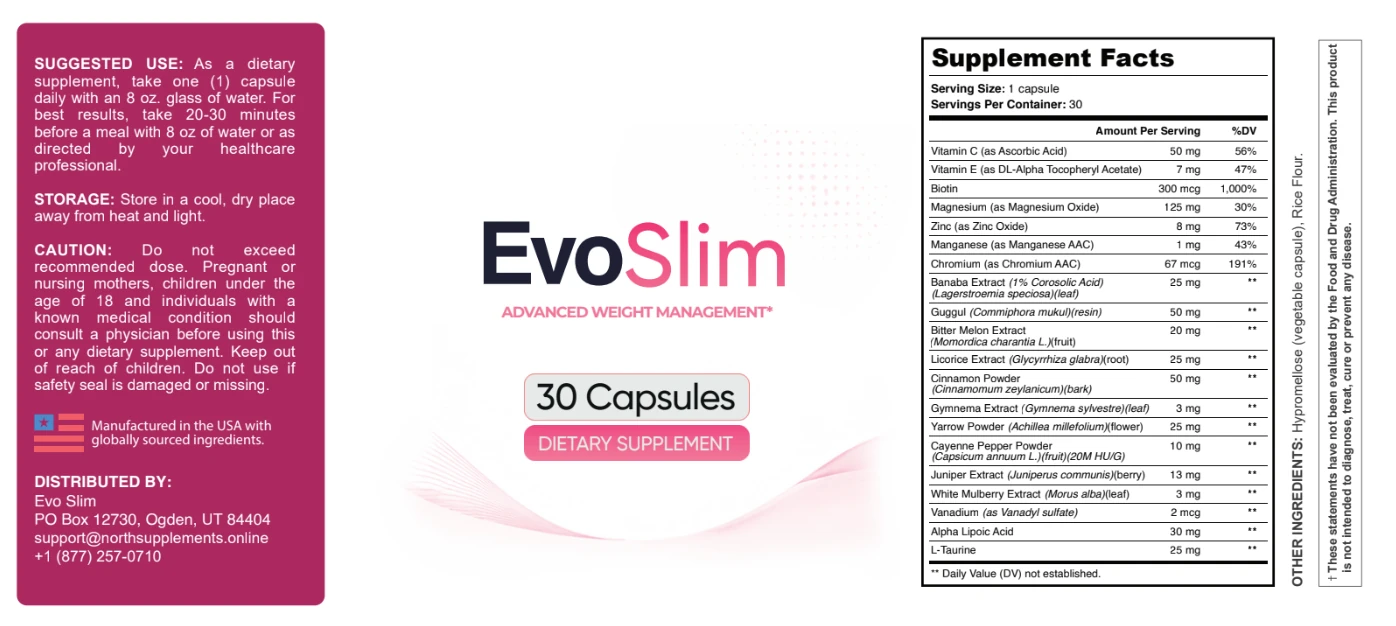
A percentage printed in front of a milligram figure is the most consequential thing on a botanical row, and it is the thing almost nobody reads. On this label it turns a 25 mg ingredient into a quarter of a milligram of the compound the plant is famous for, and the panel is being honest by telling you.
Why a percentage changes everything
Two supplements can print the same ingredient at the same milligram figure and deliver amounts that differ by a factor of eighty. Nothing about the label is dishonest in either case. The difference lives entirely in a percentage that one of them prints and the other does not.
An extract is a concentrate. Plant material goes in, solvent pulls out some fraction of what it contained, and what comes out is a powder with a different composition from the leaf it started as. A standardisation percentage tells you how much of one named compound that powder contains by weight. Without it, an extract weight is a weight of something unspecified.
So when a row reads “25 mg, 1% corosolic acid”, the useful number is not 25. It is one per cent of 25, which is 0.25 mg.
The arithmetic, in one table
The same 25 mg row, standardised four different ways, to show how little the milligram figure decides on its own.
| What the label says | What that leaves in the capsule | Why the difference |
|---|---|---|
| Banaba Extract, 25 mg, 1% corosolic acid | 0.25 mg of corosolic acid | The percentage applies to the extract weight, so one per cent of 25 mg is a quarter of a milligram |
| A hypothetical 25 mg at 10% | 2.5 mg of corosolic acid | Ten times the compound for the same printed milligram figure |
| A hypothetical 100 mg at 20% | 20 mg of corosolic acid | Eighty times the compound, on a row that looks only four times larger |
| Banaba powder, 25 mg, no percentage | Unknown | A leaf powder carries whatever the leaf carried. Without a percentage there is nothing to calculate |
One row of arithmetic, four ways. The milligram figure on the left tells you almost nothing on its own.
The fourth row is the one worth sitting with. A botanical powder with no percentage is not necessarily weak; it is unmeasurable. There is no calculation available, which is why a standardisation percentage is the single most useful thing a botanical row can carry.
A milligram figure tells you how much powder is in the capsule. A percentage tells you how much of the interesting thing is in the powder. You need both.
What that means for banaba specifically
Banaba is a tropical tree whose leaves have been used as a tea for a long time, and corosolic acid is the triterpene that made it interesting to researchers. The published review of banaba and corosolic acid describes the human work, and the amounts in it were single doses in the region of ten to forty-eight milligrams of corosolic acid.
A quarter of a milligram is between a fortieth and a two-hundredth of that. That is the honest comparison and it is not close.
None of which makes the row pointless. It makes it a small, declared, checkable amount of a botanical with a real literature behind it, sitting inside a twenty-row capsule. What it is not is a dose, and a page claiming otherwise would be relying on you not doing the arithmetic.
- The manufacturer knows what standardisation is and chose to print it.
- The extract is a real extract rather than a milled leaf, because a powder cannot be standardised.
- The comparison with the published work can be made at all, which is more than the other nine botanical rows allow.
Read the Evo Slim panel before you decide
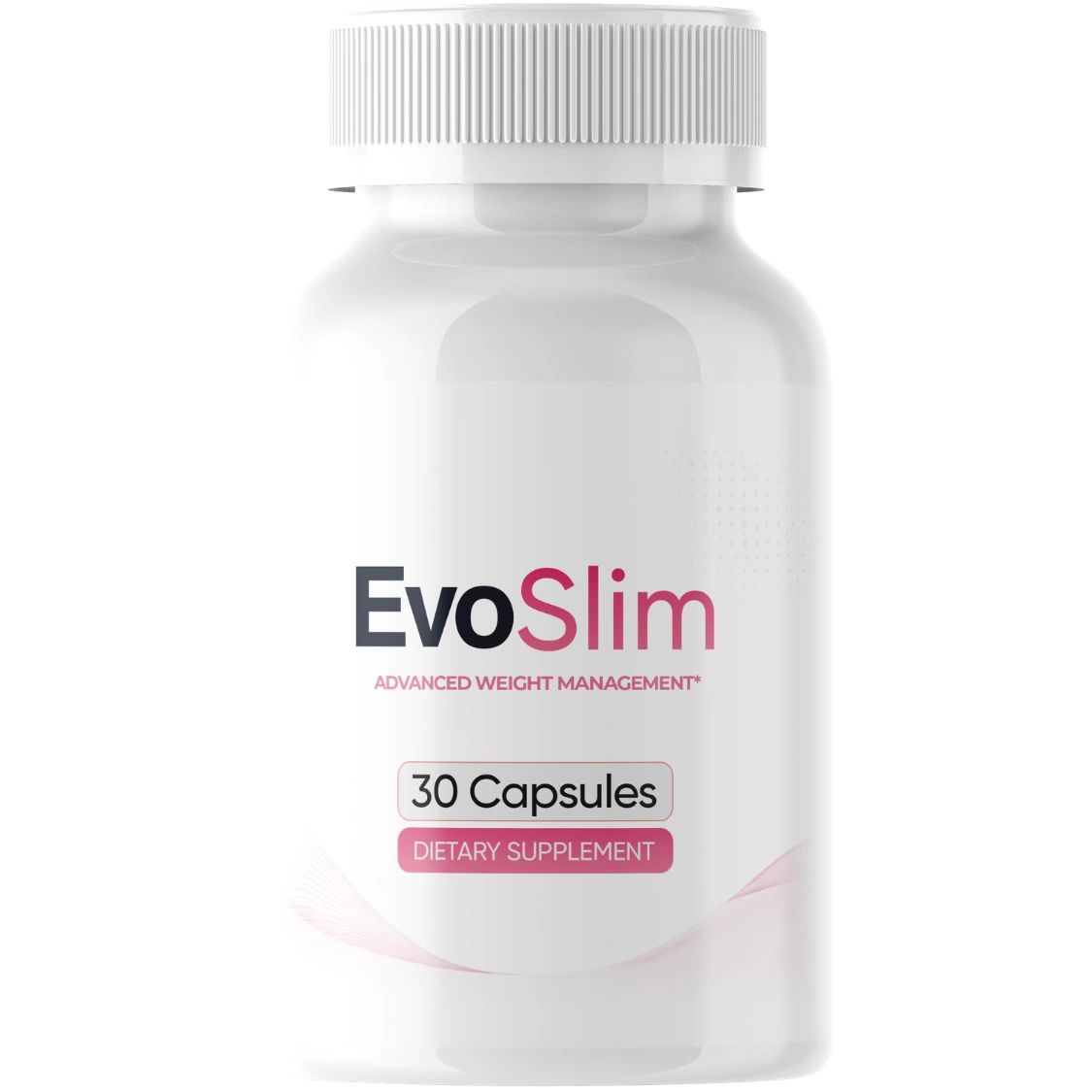
Twenty actives, an amount printed against every one, one capsule a day and 30 to a bottle. The 60-day window runs from the day you pay, so the deadline worth working to is day fifty.
Two bottles $158 · six bottles $294 · 60 days from purchase
Order Evo Slim On The Official WebsiteOne capsule a day · 30 per bottle · lot EVO-26/GO-1521
Printing it is the honest thing to do
It would have been easy to print “Banaba Extract 25 mg” and stop. The row would look identical to a reader and considerably better to anyone doing arithmetic, because there would be no arithmetic to do.
That is worth crediting, and it is worth noticing how rarely the credit is available. NCCIH's guidance on using supplements wisely makes the same point from the other direction: the things a buyer can check are the things a label chooses to disclose, and most labels choose less than this one.
It also means the criticism on this website is the manufacturer's own information used properly rather than a guess. This desk sells the product, which makes that distinction worth being explicit about.
A label that prints its own weakest number has given you something. A label that prints only the flattering ones has given you a picture of a bottle.
The nine rows that carry no percentage
Banaba is the only standardised row on this panel. Here is what that leaves for the others.
| Extract row | Standardisation printed? | What can be worked out |
|---|---|---|
| Banaba Extract (leaf) | Yes, 1% corosolic acid | 0.25 mg of the named compound |
| Gymnema Extract (leaf) | No | Nothing. 3 mg of an unspecified extract |
| Bitter Melon Extract (fruit) | No | Nothing beyond the 20 mg extract weight |
| White Mulberry Extract (leaf) | No | Nothing beyond the 3 mg extract weight |
| Juniper Extract (berry) | No | Nothing beyond the 13 mg extract weight |
| Cinnamon Powder (bark) | Not an extract | 50 mg of bark powder, directly comparable to a kitchen spoon |
Six of the ten botanical rows on this panel. One carries a percentage; the rest are extract weights with no strength attached.
Note what the table does not say. It does not say those rows are weak, because nobody can say that: an extract with no percentage might be a twenty-to-one concentrate or a two-to-one, and both are legal and both are common.
What it says is that the question cannot be answered from the label. For gymnema in particular that matters, because the pooled trials used 200 to 400 mg a day of leaf extract and this row is three milligrams. Whatever the concentration, three milligrams is three milligrams.
Powder, extract and why they are not comparable
The last row of that table is a different kind of entry. Cinnamon here is printed as powder, not extract, and the two are not interchangeable at all.
Powder is milled bark. Fifty milligrams of it is roughly a fiftieth of a teaspoon, and it carries whatever the bark carried. Extract is a concentrate of some fraction of that. The umbrella meta-analysis of cinnamon and body composition pooled trials using one to six grams a day, and grams of powder against fifty milligrams of powder is a comparison anybody can make without any further information.
That is the small advantage of a powder row: it is honest by construction. You know exactly what you have, and on this panel what you have is a culinary pinch.
How to use this on any label
Four habits, and they work on every botanical product on every shelf.
- Find the percentage first. If there is one, multiply. If there is not, treat the milligram figure as an upper bound on something unspecified.
- Check whether it says powder or extract. Powder is directly comparable to kitchen amounts. Extract is not comparable to anything without a percentage.
- Look up what the trials dosed, and in which units. Capsaicin studies dose capsaicinoids, not pepper. Mulberry studies dose leaf powder in grams. The unit is half the answer.
- Then decide what the row is for. A small declared amount of a real botanical is a reasonable thing to include. It is simply not the same thing as a dose, and the label has told you which one it is.
Applied to this bottle, that exercise is done row by row on the ingredients page, with the trial amount printed beside each label amount. The panel itself is transcribed on the supplement facts page, and MedlinePlus is a good neutral place to read about supplements generally before any of it.
The one trap left after all four
A percentage can also be printed against a marker compound that nobody has studied. “Standardised to 5% total flavonoids” is arithmetic you can do and evidence you cannot use, because the trials measured something else entirely. The percentage is only useful when the compound it names is the compound the research dosed.
Banaba passes that test: corosolic acid is what the published work measured, so one per cent of 25 mg is a figure that can be set against a real number. A marker percentage on an unstudied compound would have looked identical on the label and told you nothing at all.
So the full version of habit one is longer than it first appears. Find the percentage, multiply it out, and then check that the compound named is the one the studies used. Three steps rather than two, and the third is the one that separates a standardisation from a decoration.
Body weight has many inputs and some of the reasons it does not move deserve a proper assessment rather than a supplement. Nothing in this article is medical advice, nothing here is a treatment for anything, and anyone taking prescription medication should raise it once before starting any capsule.
References
- Stohs SJ, Miller H, Kaats GR. A review of the efficacy and safety of banaba (Lagerstroemia speciosa L.) and corosolic acid. Phytother Res. 2012;26(3):317-24. PMID 22095937. https://pubmed.ncbi.nlm.nih.gov/22095937/
- Devangan S, Varghese B, Johny E, et al. The effect of Gymnema sylvestre supplementation on glycemic control in type 2 diabetes patients: A systematic review and meta-analysis. Phytother Res. 2021;35(12):6802-6812. PMID 34467577. https://pubmed.ncbi.nlm.nih.gov/34467577/
- Keramati M, Musazadeh V, Malekahmadi M, et al. Cinnamon, an effective anti-obesity agent: Evidence from an umbrella meta-analysis. J Food Biochem. 2022;46(8):e14166. PMID 35365881. https://pubmed.ncbi.nlm.nih.gov/35365881/
- Using Dietary Supplements Wisely. National Center for Complementary and Integrative Health, National Institutes of Health. https://www.nccih.nih.gov/health/using-dietary-supplements-wisely
- Dietary Supplements. MedlinePlus, U.S. National Library of Medicine. https://medlineplus.gov/dietarysupplements.html