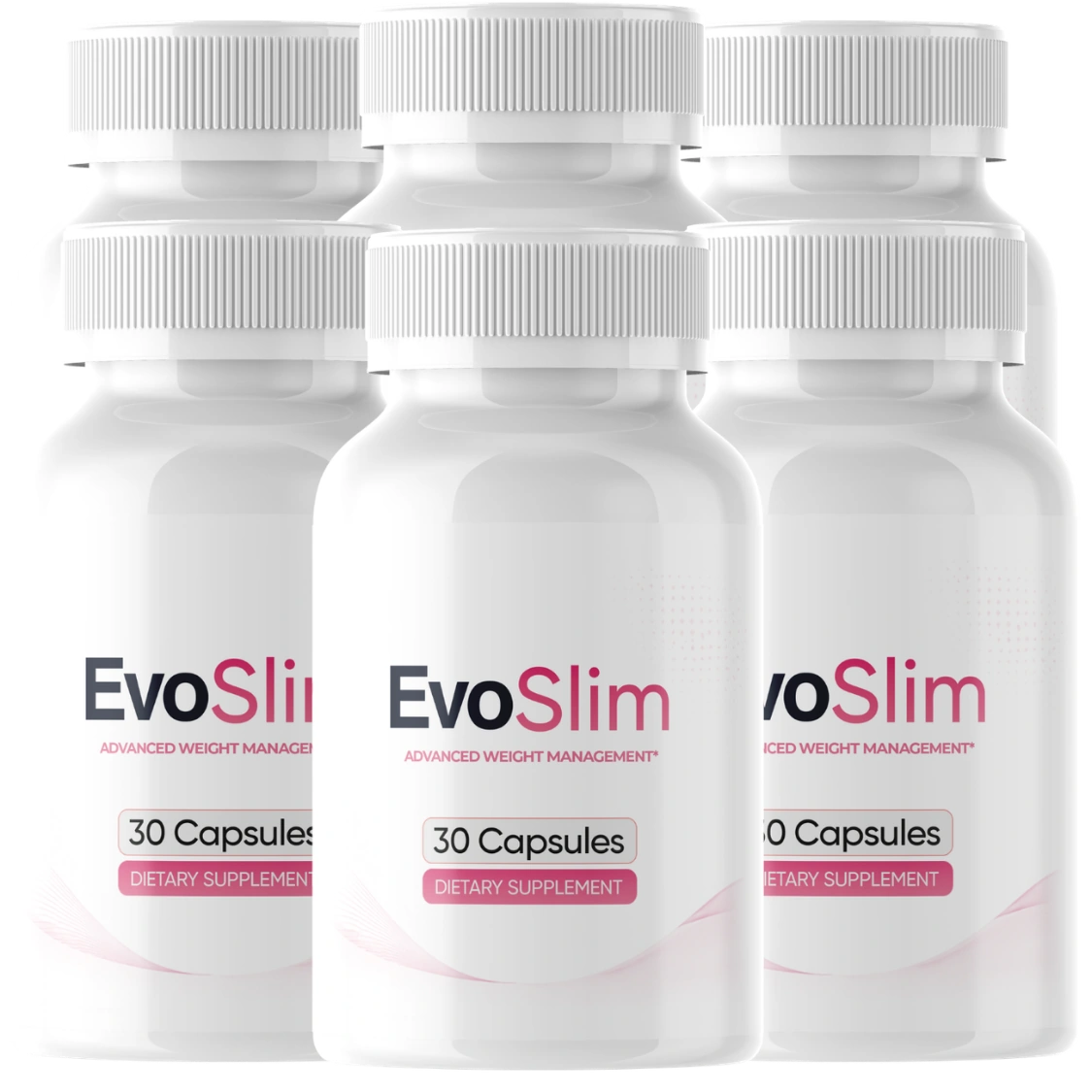
Evo Slim Official Website › Blog › The Panel The Sales Page Does Not Show
The Panel The Sales Page Does Not Show You
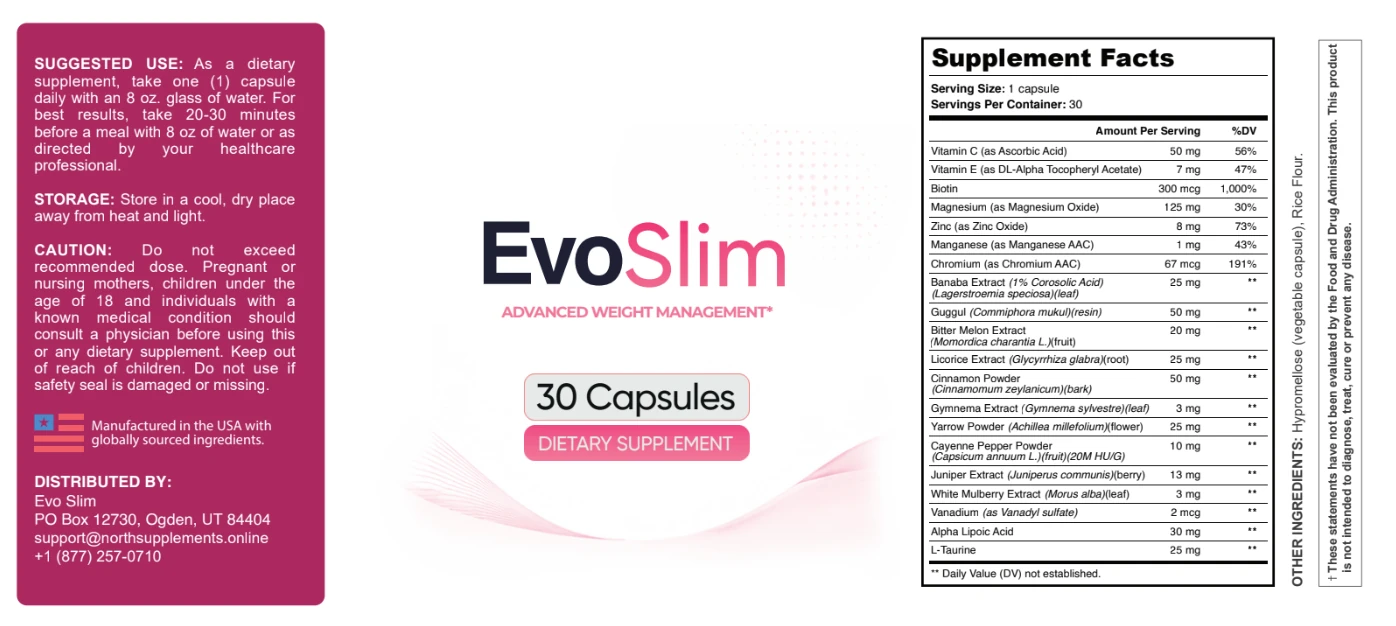
The page selling this capsule names no ingredient and shows no Supplement Facts panel. The bottle carries a complete one: twenty rows, an amount against every row, no proprietary blend anywhere. That gap is normal in this category, it is legal, and it is the single reason a website like this one is worth publishing.
The gap, stated plainly
A buyer arrives at a page, reads five benefit icons, sees three packs and a guarantee seal, and is invited to spend a hundred and fifty-eight dollars. At no point is there an ingredient list.
The bottle that arrives a week later carries a full Supplement Facts panel: twenty actives, seven with a % Daily Value, thirteen without, an amount against every one of them, and two inactive ingredients. Nothing on it is hidden behind a blend name.
So the information exists. It is complete, it is unusually good for this shelf, and it is simply not where somebody was standing when they decided.
The numbers were never missing. They were on the bottle, behind the purchase, which is the wrong side of the decision to be on.
Why it is legal
A Supplement Facts panel is required on the product label. It is not required on the advertising for the product, and an advertising page is what a sales page is.
The rules on what a supplement label may claim govern what can be said, not how much must be shown in an advertisement. The FTC's health products compliance guidance governs substantiation for the claims that are made. Neither obliges a seller to publish an ingredient list before the sale.
That is worth understanding rather than being outraged about, because it is the structure that produces the whole category's behaviour. A page that shows a panel invites comparison. A page that shows icons does not.
What a front page does carry
| What is on the front page | What it tells you | What it leaves out |
|---|---|---|
| Five benefit icons | What the seller wants the product associated with | Which row is supposed to produce which benefit |
| A price ladder with a struck figure | What the packs cost today | Whether the struck figure was ever a selling price |
| A money-back seal | That a window exists | When the window starts counting |
| A GMP and FDA-registered-facility mark | Statements about the factory | That neither is approval of the product |
| No ingredient list | — | Everything a buyer would need to compare it with anything else |
An audit of the shop window, not of the bottle. The bottle is considerably more forthcoming than the page selling it.
Read as an audit rather than as an advertisement, the front page is not dishonest. Every element on it is a true statement about something. It is just that the something is rarely the capsule.
The last row is the one that matters. Without an ingredient list there is no way to compare this product with the one next to it, and comparison is the only thing that would put pressure on either of them.
Read the Evo Slim panel before you decide
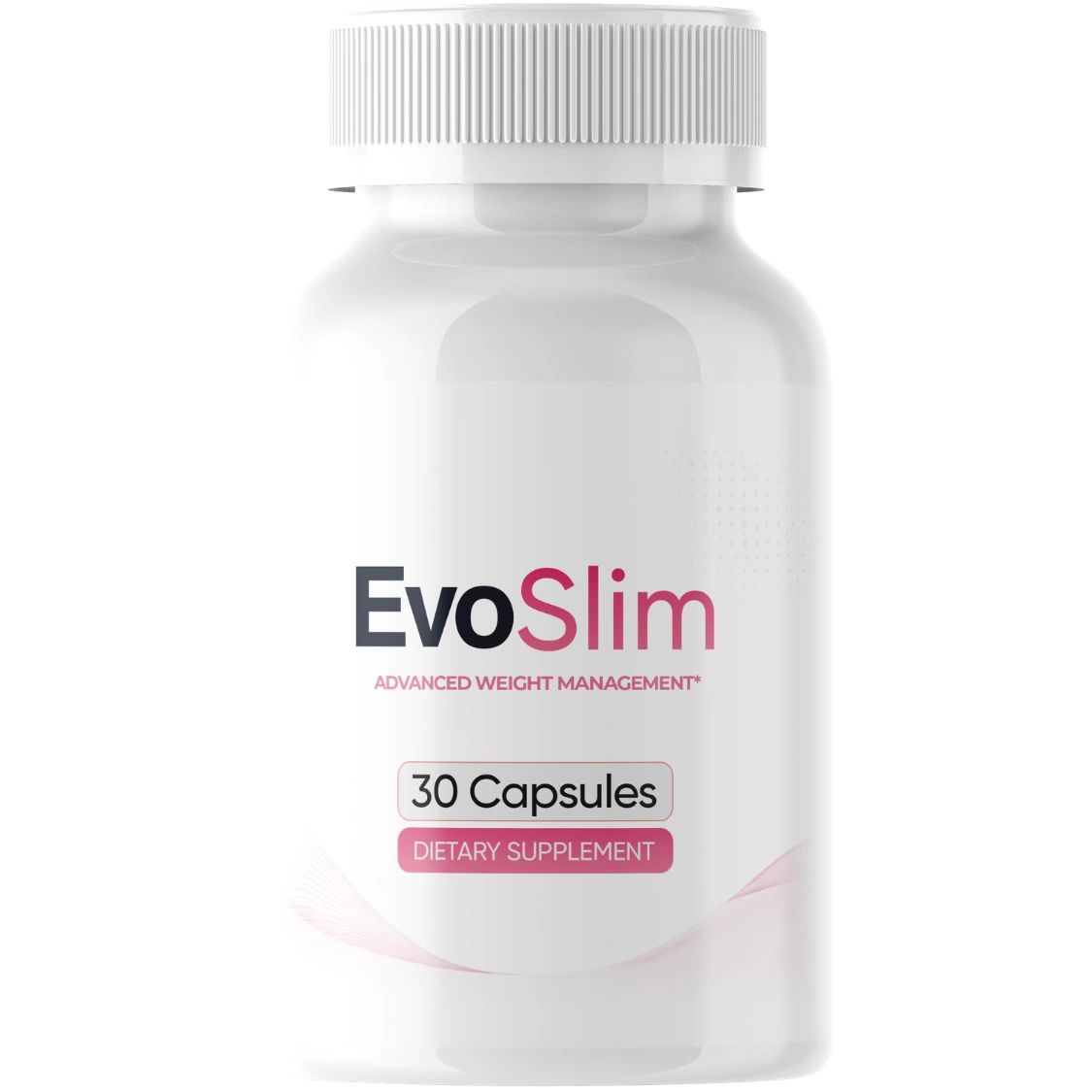
Twenty actives, an amount printed against every one, one capsule a day and 30 to a bottle. The 60-day window runs from the day you pay, so the deadline worth working to is day fifty.
Two bottles $158 · six bottles $294 · 60 days from purchase
Order Evo Slim On The Official WebsiteOne capsule a day · 30 per bottle · lot EVO-26/GO-1521
Five places to find a panel
| Where to look | What you usually find | How reliable |
|---|---|---|
| The seller's front page | Benefit icons, a bottle photograph, a price ladder | Rarely carries a panel at all |
| The product's own label artwork | The full Supplement Facts panel | The primary source. Everything else is derived from it |
| A retailer's listing photographs | Sometimes a readable shot of the back of the bottle | Good when it exists |
| A review site | A transcription, sometimes wrong | Useful for finding the numbers, never for trusting them |
| The bottle in your hand | The panel, and the lot on the base | The only version that describes the product you actually bought |
Five places, and only two of them are the label. A transcription is a convenience; the artwork is the source.
The practical order is: look for readable label photographs first, because a photograph of the back of a bottle is the artwork and cannot be paraphrased. Then look for a transcription, and treat it as a way of finding the numbers rather than as the numbers.
When the bottle arrives, read the real one. A transcription can be wrong, including this site's, and the bottle in your hand is the only version that describes what you actually bought.
- Ask the seller directly. A desk that will not send you a panel photograph before a sale has told you something useful.
- Search the product name with the words “supplement facts”. Label photographs are usually indexed even when the seller's page has none.
- Check the count and the serving size first. Everything else on a panel is per serving, and a panel per three capsules is a different product from the same panel per one.
- Look for a blend name before anything else. If one is there, the rest of the exercise is not available.
Why transcribing it is the job
This website exists in the shape it does because of that gap, and it is worth being explicit about what the shape is.
The panel is reproduced in full, row by row, in the label's own order and wording, on the supplement facts page. Every declared amount is then set beside the amount its published research used, on the ingredients page, including the rows where this label is a hundredth of the trial.
That second half is what makes the first half worth anything. A transcription alone is just a longer advertisement; a transcription with the research amounts beside it is something a reader can actually use.
- The whole panel, in the label's order, not the flattering rows.
- The date and the source, so a figure can be checked against the bottle.
- The trial amounts beside the label amounts, including where they disagree.
- A correction route that changes the page rather than answering privately.
What the bottle turns out to say
The pleasant surprise of doing this exercise on this particular product is that the panel is good. Not the amounts, which are mostly small, but the disclosure.
Twenty rows, twenty printed figures, no proprietary blend anywhere, a standardisation on the banaba row, plant parts named in brackets, and an other-ingredients line naming a hypromellose shell rather than gelatin. On the nine-point checklist this desk publishes, the product scores nine out of ten on disclosure and loses its marks elsewhere.
That is the shape of a manufacturer that is being straight about what is in the bottle and a seller that is not being especially straight about what is on the page. They are different organisations and it shows.
What to do about it on any shelf
Three habits, and they generalise past this product entirely.
- Never buy from a page with no panel without finding the panel first. It takes two minutes and it is the difference between choosing and hoping.
- Treat benefit icons as the seller's framing, not as claims. They are a picture of an intention. The label is the statement.
- Be most careful where there is no company at all. The FDA's database of weight products found to contain undeclared drug ingredients is long, and almost everything on it was sold without a panel, an address or a lot number.
The version of this that would end the problem
A seller could publish the panel on the page that sells the product. That is the whole fix, it costs nothing, and it would make a website like this one unnecessary for that product.
The reason almost nobody does it is that a panel invites comparison, and comparison is the one thing a benefit icon is designed to avoid. A page showing twenty rows at printed amounts is a page a reader can put beside another page and judge. A page showing five graphics is not.
Which means the absence is not an oversight. It is a decision, taken for a reason, by people who know exactly what the bottle says. Understanding that is more useful than being annoyed about it, because it tells you what to go and find before you spend anything.
None of that requires expertise. It requires the panel, which is why this article and this website are mostly about getting hold of one. NCCIH's guidance on using supplements wisely and the NIH review of weight-related supplements are both worth reading afterwards, in that order.
Body weight has many inputs and some of the reasons it does not move deserve a proper assessment rather than a supplement. Nothing in this article is medical advice, nothing here is a treatment for anything, and anyone taking prescription medication should raise it once before starting any capsule.
References
- Structure/Function Claims. U.S. Food and Drug Administration, Dietary Supplement Labeling Guide. https://www.fda.gov/food/dietary-supplements-guidance-documents-regulatory-information/structurefunction-claims
- Health Products Compliance Guidance. Federal Trade Commission, December 2022. https://www.ftc.gov/business-guidance/resources/health-products-compliance-guidance
- Dietary Supplements for Weight Loss: Fact Sheet for Health Professionals. Office of Dietary Supplements, National Institutes of Health. https://ods.od.nih.gov/factsheets/WeightLoss-HealthProfessional/
- Tainted Weight Loss Products. U.S. Food and Drug Administration, Health Fraud Product Database. https://www.fda.gov/consumers/health-fraud-scams/tainted-weight-loss-products
- Using Dietary Supplements Wisely. National Center for Complementary and Integrative Health, National Institutes of Health. https://www.nccih.nih.gov/health/using-dietary-supplements-wisely