Evo Slim Official Website › Blog › Biotin And Your Blood Test
Biotin, 300 Micrograms, And The Blood Test Nobody Warns You About
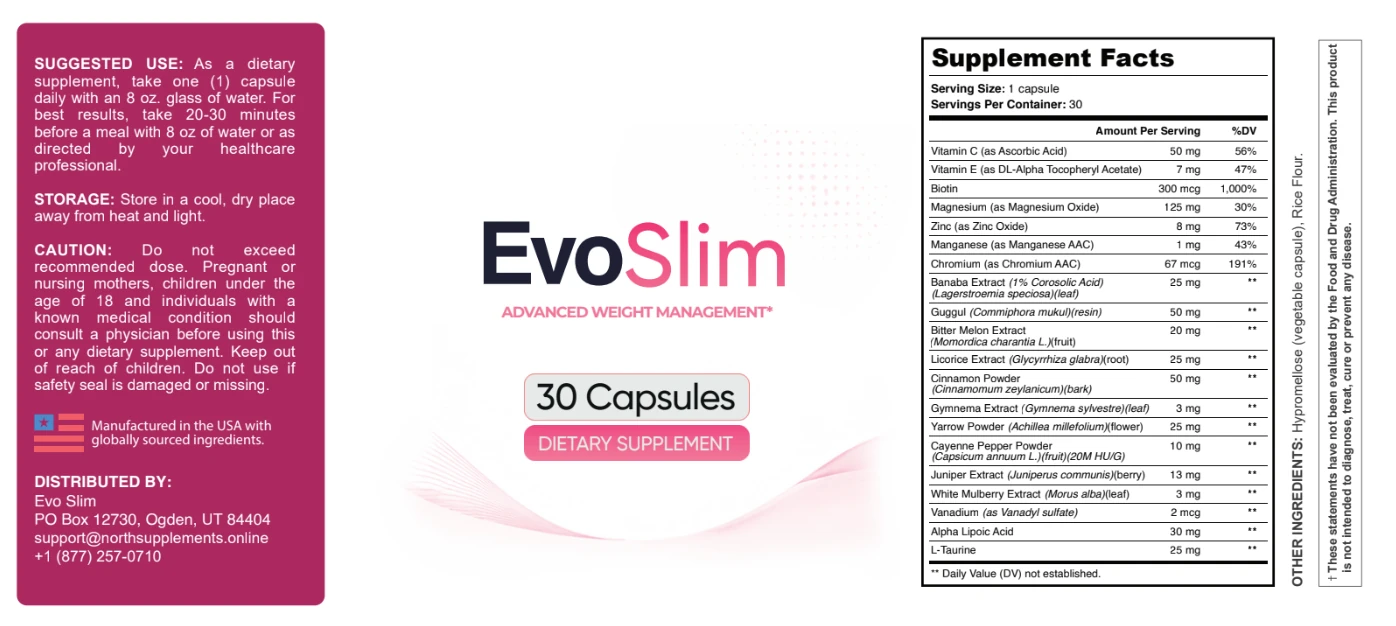
One row on this panel has a consequence inside a week, and it has nothing to do with weight. Biotin at supplemental amounts can distort several common laboratory tests, in either direction, and almost nobody taking it expects that. It is a reporting problem rather than a health one, and it is fixed by a sentence.
What actually happens
A great many modern laboratory tests use a binding step built on biotin and streptavidin, which grip each other more tightly than almost any other pair of molecules in biology. That grip is what makes the test work.
When there is extra biotin circulating in the sample, it competes for the same binding sites. Depending on how the assay is designed, that either inflates the result or deflates it. The laboratory-medicine literature on biotin interference sets out the mechanism and the assay families involved.
Nothing has happened to the patient. What has changed is the number that comes back, and the number is what decisions get made on.
The patient is fine. The reading is wrong. That distinction is the whole of this article, and it is the reason it is worth a sentence at reception.
Which tests are involved
| Assay family | Typical direction of the error | Why it matters |
|---|---|---|
| Thyroid hormones (T4, T3) | Falsely high | The pattern can resemble an overactive thyroid that is not there |
| Thyroid stimulating hormone | Falsely low | Combined with the row above, it produces a convincing but wrong picture |
| Cardiac troponin | Falsely low | The one with the sharpest consequence, because troponin is read urgently |
| Some hormone panels | Either direction | Depends on whether the assay is competitive or sandwich format |
| Many routine chemistry tests | Unaffected | Only assays using a biotin-streptavidin binding step are involved |
Directions are the general pattern described in the laboratory-medicine literature. The specific effect depends on the assay a laboratory uses.
The troponin row is the one that matters most and it runs the dangerous direction: falsely low. A troponin test is usually being read because somebody has chest pain, and a falsely reassuring result in that setting is a far worse outcome than a falsely alarming thyroid panel.
That is not a reason for alarm about a supplement. It is a reason to say what you take when a blood sample is drawn, which costs nothing and settles the whole question.
Why 300 micrograms is enough to matter
The adequate intake for biotin in adults is about 30 micrograms a day, which is why this row prints 1,000% of the Daily Value. Three hundred micrograms is ten times the nutritional reference and it comes from a single capsule.
By supplement standards that is modest. Hair, skin and nail products routinely carry 5,000 or 10,000 micrograms, which is where most of the reported interference comes from. The FDA's safety communication was issued because of cases at those higher amounts.
Three hundred micrograms sits at the low end of the range that has been discussed in the literature. The honest position is that it is probably not enough on its own to move most assays much, and that nobody can tell you whether it moved yours, which is exactly why the laboratory should be the one deciding.

Read the Evo Slim panel before you decide
Twenty actives, an amount printed against every one, one capsule a day and 30 to a bottle. The 60-day window runs from the day you pay, so the deadline worth working to is day fifty.
Two bottles $158 · six bottles $294 · 60 days from purchase
Order Evo Slim On The Official WebsiteOne capsule a day · 30 per bottle · lot EVO-26/GO-1521
The fix, which is one sentence
There is no complicated protocol here and this article is not asking anyone to stop taking anything.
- Say it when the sample is taken. “I take a daily supplement that contains 300 micrograms of biotin.” That sentence is the entire intervention.
- Let the laboratory decide. Some assays are unaffected. Some laboratories ask for a pause of a day or two. That judgement belongs to whoever is interpreting the result.
- Do not stop a prescribed medicine to make this simpler. This is a supplement question and it has a supplement answer.
- If a result looks wrong and you were not asked, mention it then. An unexpected thyroid pattern in somebody who feels well is worth a second thought before it becomes a diagnosis.
The simplest version is to photograph the panel on the bottle and keep the picture on your phone. Twenty rows is too many to recite at a desk, and a photograph answers every follow-up question in one go.
The stacking problem
Three hundred micrograms is the figure on this label. It is not necessarily the figure in your bloodstream, because biotin is one of the most commonly duplicated rows in a bathroom cabinet.
| Row | Amount here | Also commonly taken as | What to do |
|---|---|---|---|
| Biotin | 300 mcg | Hair, skin and nail formulas, often 5,000–10,000 mcg | Add them together and mention the total |
| Zinc (oxide) | 8 mg | A multivitamin or a separate zinc tablet | Add them. Zinc competes with copper |
| Magnesium (oxide) | 125 mg | A magnesium supplement for sleep or cramp | Add them. The digestive effect scales with the total |
| Chromium | 67 mcg | A blood-sugar support product | Add them, though the trial amounts were much higher |
Four of the twenty rows appear routinely in other bottles. The other sixteen rarely do at amounts worth counting.
A daily multivitamin plus a hair formula plus this capsule can reach several thousand micrograms without anybody making a decision to do that. The same arithmetic applies to zinc, which competes with copper and to magnesium, whose digestive effect scales with the total.
The five-minute fix is to put every bottle on the kitchen table and read the panels side by side. It is a better use of the time than any amount of reading about individual ingredients.
What this is not
- It does not say biotin is unsafe. It is a B vitamin with no established upper intake level and an unremarkable safety record.
- It does not say this product is dangerous. The interference is with a measurement, not with a person.
- It does not say to stop taking it. That decision belongs with whoever is running the test, and they need to know it exists before they can make it.
- It does not say the effect will definitely happen at 300 micrograms. It says the laboratory should be the one to judge, because only they know their assay.
The reason this is worth a whole article rather than a line in a footer is that it is the single most actionable thing on this panel. Everything else here is about amounts and evidence over weeks. This one has a consequence next Tuesday, and it is prevented by saying eleven words.
Why a label carries biotin at all
Biotin is inexpensive, it is associated in the public mind with hair and nails, and a four-digit Daily Value percentage looks impressive on a panel. Those are the commercial reasons and they are worth stating.
There is also a straightforward nutritional one. Biotin is involved in the enzymes that handle fats and carbohydrates, which is a reasonable thing to include in a broad daily capsule aimed at an everyday routine. MedlinePlus is a good neutral place to read about it.
Both can be true. What matters for a reader is that the row is printed, the amount is checkable, and the one practical consequence it carries is on this page rather than buried.
Why nobody warns you
The interference has been known in laboratory medicine for years and is well documented in the journals that laboratory staff read. It is not well known outside them, and the reason is structural rather than sinister.
A supplement label is not required to carry a warning about assay interference, because the interference is not a property of the person taking it. A clinician ordering a test usually asks about medicines rather than about supplements. And the patient does not think of a daily capsule as something a blood test would care about, because in every other respect it is not.
So three people who each behave reasonably produce a gap between them, and it closes the moment anybody says the word out loud. That is why this article asks for a sentence rather than for a behaviour change: the sentence is the only part of the chain that is missing.
The rest of the panel is transcribed on the supplement facts page, and the four rows worth raising in a medication conversation are on the side effects page.
Body weight has many inputs and some of the reasons it does not move deserve a proper assessment rather than a supplement. Nothing in this article is medical advice, nothing here is a treatment for anything, and anyone taking prescription medication should raise it once before starting any capsule.
References
- Colon PJ, Greene DN. Biotin Interference in Clinical Immunoassays. J Appl Lab Med. 2018;2(6):941-951. PMID 33636825. https://pubmed.ncbi.nlm.nih.gov/33636825/
- Biotin (Vitamin B7): Safety Communication - May Interfere with Lab Tests. U.S. Food and Drug Administration. https://www.fda.gov/medical-devices/safety-communications/update-fda-warns-biotin-may-interfere-lab-tests-fda-safety-communication
- Zinc: Fact Sheet for Health Professionals. Office of Dietary Supplements, National Institutes of Health. https://ods.od.nih.gov/factsheets/Zinc-HealthProfessional/
- Magnesium: Fact Sheet for Health Professionals. Office of Dietary Supplements, National Institutes of Health. https://ods.od.nih.gov/factsheets/Magnesium-HealthProfessional/
- Dietary Supplements. MedlinePlus, U.S. National Library of Medicine. https://medlineplus.gov/dietarysupplements.html